


Page 69 - sst_class_06
P. 69
AriKAmedu
Arikamedu was a coastal settlement where ships unloaded goods from distant lands. A massive
brick structure, which may have been a warehouse was found at the site. Other finds include
pottery from the Mediterranean region, such as amphorae and stamped red glazed pottery
known as Arretine ware, which was named after a city in Italy. This was made by pressing wet
clay into a stamped mould. There was yet another kind of pottery which was made locally,
though Roman designs were used. Roman lamps glassware and gems have also been found at
site. Small tanks have been found that were probably dyeing vats, used to dye cloth. There is
plenty of evidence for the making of beads from semi-precious stones and glass.
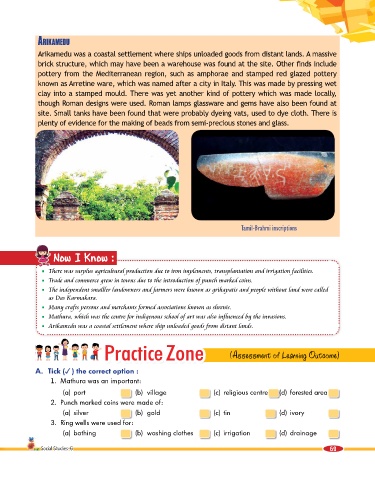
Tamil-Brahmi inscriptions
Now I Know :
There was surplus agricultural production due to iron implements, transplantation and irrigation facilities.
Trade and commerce grew in towns due to the introduction of punch marked coins.
The independent smalller landowners and farmers were known as grihapatis and people without land were called
as Das Karmakara.
Many crafts persons and merchants formed associations known as shrenis.
Mathura, which was the centre for indigenous school of art was also influenced by the invasions.
Arikamedu was a coastal settlement where ship unloaded goods from distant lands.
(Assessment of Learning Outcome)
A. Tick () the correct option :
1. Mathura was an important:
(a) port (b) village (c) religious centre (d) forested area
2. Punch marked coins were made of:
(a) silver (b) gold (c) tin (d) ivory
3. Ring wells were used for:
(a) bathing (b) washing clothes (c) irrigation (d) drainage
Social Studies-6 69

