


Page 68 - sst_class_06
P. 68
material, and distribute the finished product. Then shrenis of merchants organised the
             trade. Shrenis also functioned as banks, where rich people deposited their money. This was

             invested and part of the interest was returned or used to support religious institutions such
             as monasteries.


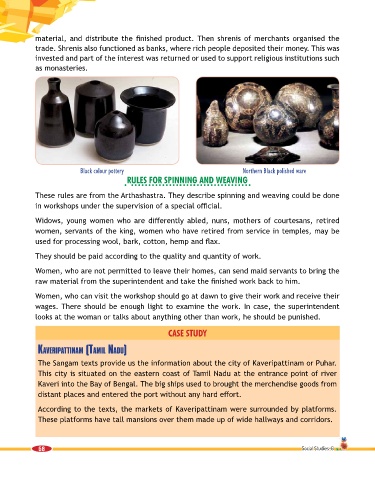
                             Black colour pottery                                    Northern Black polished ware
                                             rules for spInnIng and WeaVIng

             These rules are from the Arthashastra. They describe spinning and weaving could be done
             in workshops under the supervision of a special official.

             Widows, young women who are differently abled, nuns, mothers of courtesans, retired

             women, servants of the king, women who have retired from service in temples, may be
             used for processing wool, bark, cotton, hemp and flax.

             They should be paid according to the quality and quantity of work.

             Women, who are not permitted to leave their homes, can send maid servants to bring the

             raw material from the superintendent and take the finished work back to him.

             Women, who can visit the workshop should go at dawn to give their work and receive their
             wages. There should be enough light to examine the work. In case, the superintendent
             looks at the woman or talks about anything other than work, he should be punished.


                                                           case study

              KAveripAttinAm (tAmil nAdu)

              The Sangam texts provide us the information about the city of Kaveripattinam or Puhar.

              This city is situated on the eastern coast of Tamil Nadu at the entrance point of river
              Kaveri into the Bay of Bengal. The big ships used to brought the merchendise goods from
              distant places and entered the port without any hard effort.

              According to the texts, the markets of Kaveripattinam were surrounded by platforms.
              These platforms have tall mansions over them made up of wide hallways and corridors.


              68                                                                                         Social Studies-6

