


Page 55 - sst_class_07
P. 55
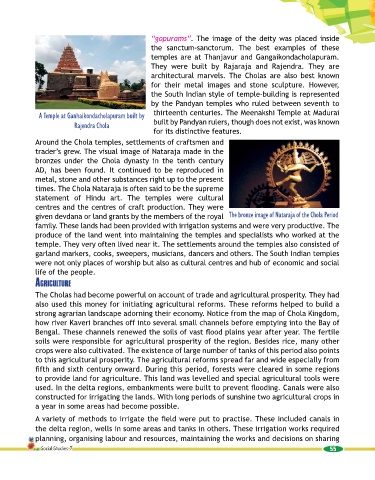
“gopurams”. The image of the deity was placed inside
                                                     the sanctum-sanctorum.  The best examples of these
                                                     temples are at Thanjavur and Gangaikondacholapuram.
                                                     They were built by Rajaraja and Rajendra.  They are
                                                     architectural marvels. The Cholas are also best known
                                                     for their metal images and stone sculpture. However,
                                                     the South Indian style of temple-building is represented
                                                     by the Pandyan temples who ruled between seventh to

               A Temple at Ganhaikondacholapuram built by   thirteenth centuries. The Meenakshi Temple at Madurai
                           Rajendra Chola             built by Pandyan rulers, though does not exist, was known
                                                      for its distinctive features.

             Around the Chola temples, settlements of craftsmen and
             trader’s grew. The visual image of Nataraja made in the
             bronzes under the Chola dynasty in the tenth century
             AD,  has  been  found.  It continued to  be  reproduced in
             metal, stone and other substances right up to the present
             times. The Chola Nataraja is often said to be the supreme
             statement of Hindu art.  The temples were cultural
             centres and the centres of craft production. They were
             given devdana or land grants by the members of the royal           The bronze image of Nataraja of the Chola Period
             family. These lands had been provided with irrigation systems and were very productive. The
             produce of the land went into maintaining the temples and specialists who worked at the
             temple. They very often lived near it. The settlements around the temples also consisted of
             garland markers, cooks, sweepers, musicians, dancers and others. The South Indian temples
             were not only places of worship but also as cultural centres and hub of economic and social
             life of the people.
             aGRiCultuRe

             The Cholas had become powerful on account of trade and agricultural prosperity. They had
             also used this money for initiating agricultural reforms. These reforms helped to build a
             strong agrarian landscape adorning their economy. Notice from the map of Chola Kingdom,
             how river Kaveri branches off into several small channels before emptying into the Bay of
             Bengal. These channels renewed the soils of vast flood plains year after year. The fertile
             soils were responsible for agricultural prosperity of the region. Besides rice, many other
             crops were also cultivated. The existence of large number of tanks of this period also points
             to this agricultural prosperity. The agricultural reforms spread far and wide especially from
             fifth and sixth century onward. During this period, forests were cleared in some regions
             to provide land for agriculture. This land was levelled and special agricultural tools were
             used. In the delta regions, embankments were built to prevent flooding. Canals were also
             constructed for irrigating the lands. With long periods of sunshine two agricultural crops in
             a year in some areas had become possible.
             A variety of methods to irrigate the field were put to practise. These included canals in

             the delta region, wells in some areas and tanks in others. These irrigation works required
             planning, organising labour and resources, maintaining the works and decisions on sharing
               Social Studies-7                                                                                    55

